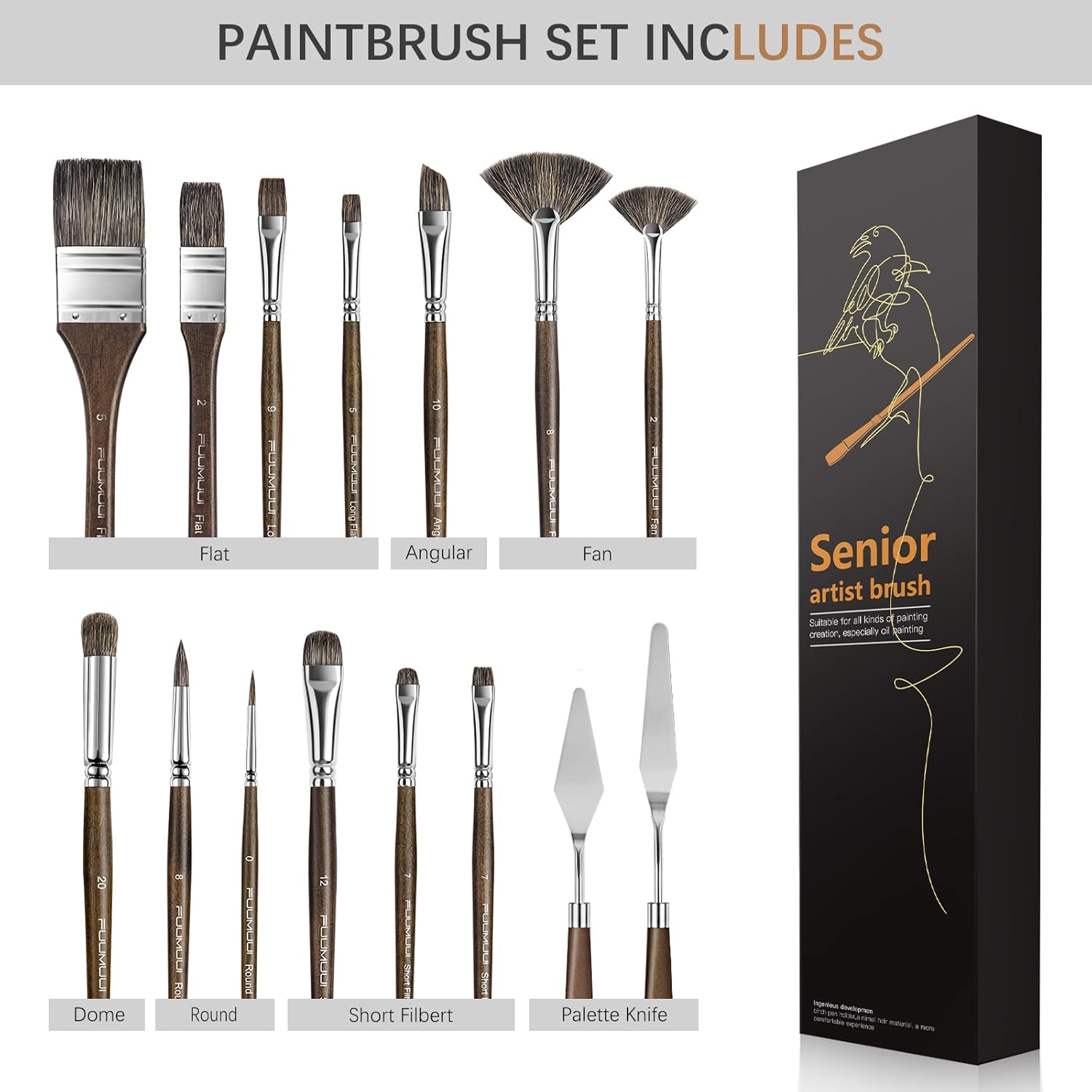
If you’ve spent time painting with oils — even just a few months — you’ve probably run into this frustrating moment: you’ve laid in two colors side by side, and now you need them to melt into each other. You drag a regular brush through the join, and instead of a smooth gradient, you get streaks, muddy patches, or visible bristle marks that refuse to disappear. The problem isn’t your technique. It’s the tool. A badger blending brush — a wide, fan- or dome-shaped brush made from the soft underfur of the European badger (Meles meles) — is designed to do exactly one thing brilliantly: move across already-applied wet paint with such a light, airy touch that it diffuses edges without lifting, relocating, or contaminating the paint beneath it. Think of it as a finishing sweep, not a painting tool. This guide explains how these brushes work, who genuinely benefits from owning one, what the real trade-offs are across brands and price points, and how to decide whether the purchase makes sense for where you are right now in your practice.
| EDITOR'S PICKWinsor & Newton Winton Long Han… | Mid-tierda Vinci Oil & Acrylic Series 4… | Budget pick[MEEDEN Artist Oil Paint Brush S](https://www.amazon.com/dp/B0DB75BDT3?tag=greenflower20-20)… | |
|---|---|---|---|
| Bristle type | — | Hog bristle | Hog bristle |
| Brush count | 5 | 5 | 10 |
| Shape variety | Round, Filbert, Flat, Bright, Fan | — | — |
| Handle material | — | Red handle | Wood |
| Price | $49.89 | $45.00 | $24.71 |
| See on Amazon → | See on Amazon → | See on Amazon → |
What Badger Hair Actually Does That Other Brushes Can’t
The physics here matter, because understanding them is what makes the purchasing decision obvious. Badger underfur is exceptionally fine and slightly crimped, which creates a natural spring and a very large surface area relative to the amount of hair. When you fan or dome-shape those hairs and use the brush dry — meaning with no medium or paint loaded into it — the tips barely graze the surface of wet oil paint. They don’t push or pull pigment directionally the way a flat hog-bristle brush does. Instead, they create tiny, multidirectional micro-movements that soften transitions while leaving the paint’s overall position essentially intact.
Artists Network’s overview of brush hair types for oil painters describes this as the “light diffusion” property that distinguishes soft, large-diameter natural-hair brushes from working brushes. The effect is difficult to replicate with synthetics at comparable price points, though some high-end synthetic blenders have narrowed the gap — more on that in a moment.
Hog bristle, the workhorse of most oil painters’ kits, is too stiff and too directional for this job. Kolinsky sable, the gold standard for watercolor and for fine detail in oils, is too small and too springy — it tends to pull rather than diffuse. Badger sits in a functional niche that neither of those fills.
When badger blending is the right move:
- Soft-focus backgrounds in portrait or figurative work
- Gradated skies in landscape painting
- Smooth skin transitions in academic or realist portraiture
- Sfumato-style modeling (the Leonardo-derived technique of gradual tonal blending without visible brushwork)
- Finishing passes on any area where you want zero visible stroke
When badger blending is the wrong move:
- Alla prima (wet-in-wet single-session) work where paint is too fluid to hold diffusion
- Textural or expressive painting where visible strokes are the point
- Glazing or thin-layer work on dry paint
The Real Brush Market in 2026: What You’re Actually Choosing Between
By the numbers:
| Category | Typical price range | Primary use case |
|---|---|---|
| Budget badger fan/mop | $8–$22 | Student and experimental work |
| Mid-range badger blender (Rosemary & Co, Silver Brush) | $28–$65 | Serious intermediate to professional |
| Premium badger (Isabey, specialty makers) | $70–$150+ | Dedicated portraitists and academic painters |
| High-end synthetic blender alternative | $20–$55 | Vegan-friendly, more consistent availability |
The market for badger blending brushes is smaller and less standardized than the kolinsky sable or hog-bristle markets, which means quality variation is significant. Jacksons Art Supplies’ comprehensive brush guide notes that “badger” on a brush label does not guarantee consistent hair grade — some manufacturers use coarser body hair rather than the finer underfur, and the performance difference is substantial. This is the category where reading reviews from working painters matters more than reading spec sheets.
Rosemary & Co (UK-based, strong reputation among professional oil painters) produces a badger blending mop that working painters consistently rate as the benchmark for mid-range performance. Owners report that the dome shape holds its form through extended sessions and that the hair quality is reliably soft without being so delicate that the brush wears quickly. At roughly £28–£40 depending on size (approximately $35–$50 USD at current exchange rates), it represents the sweet spot for most intermediate practitioners.
Silver Brush Limited (US-based) offers a more accessible entry point. Their Grand Prix badger blenders are stocked widely by US retailers and reviewed favorably by students and intermediate painters who want to test the category before committing to a higher price point. Artists Network reviewers consistently describe them as “good enough to understand what badger blending does” — which is an honest and useful framing for someone still calibrating.
Isabey (French, century-old maker) is the name that comes up in professional portraiture contexts. Their badger brushes are softer, more precisely shaped, and significantly more expensive. The Jackson’s Art Blog notes Isabey as among the few makers whose quality control justifies the premium for working professionals; the trade-off is price and, occasionally, availability.
The synthetic alternative conversation is worth taking seriously in 2026. Regulatory pressure on badger hair sourcing in the EU has increased since 2023, and some professional painters have preemptively shifted to high-end synthetic blenders from Princeton Catalyst or Escoda’s synthetic lines. The Artist’s Magazine’s coverage of blending techniques for oil painters notes that advanced synthetic filaments have improved dramatically in softness and snap, but most working painters who have used both still report that genuine badger produces a more forgiving, less “grippy” diffusion on the paint surface. That gap is real but narrowing.
The CITES and Sourcing Question You Should Know About
Badger (Meles meles) is not currently listed under CITES (the international wildlife trade convention that controls kolinsky sable, for example), so there is no import/export documentation requirement comparable to what governs kolinsky brushes. However, European badger is a protected species under UK law (the Protection of Badgers Act 1992) and under EU habitats directives, meaning that commercial harvest of UK or EU badger for brush manufacturing is effectively prohibited. The badger hair used in artist brushes is predominantly sourced from China, where Meles meles and related subspecies are not protected to the same degree.
This sourcing reality is worth knowing for two reasons. First, it means “European badger blending brush” on a label is a hair-type description, not a geographic sourcing claim — essentially all commercial badger brushes use Chinese-sourced hair. Second, it means the ethical calculus is less acute than with kolinsky sable (where the Siberian population and CITES regulations create ongoing supply uncertainty), but not entirely absent for animal-welfare-conscious buyers. Rosemary & Co’s published product information is among the more transparent in the category about their sourcing; Isabey’s is less detailed. If sourcing matters to your purchasing decision, contacting makers directly is the most reliable approach.
Decision Framework: Should You Buy One Right Now?
Here’s the honest version of this decision, broken into the situations that actually apply to intermediate practitioners:
If you’re primarily painting alla prima or in an expressive, textural style: Skip it for now. Badger blending brushes reward deliberate, layered technique. If your sessions don’t include a “finishing pass” phase where you’re refining soft transitions in wet paint, this tool will sit unused.
If you’re painting portraits, figurative work, or landscapes where gradation and atmosphere matter: Yes, and the sooner the better. The difference in achievable softness — particularly in skin and sky — is substantial enough that painters who add a badger blender often describe it as one of those rare purchases that visibly moves their work. The Rosemary & Co badger mop is the recommendation most consistent with what working painters at the intermediate level report; it’s priced accessibly enough to feel low-risk and performs well enough that you won’t immediately outgrow it.
If you’re cost-conscious and want to test the category: The Silver Brush Grand Prix line gives you a genuine badger experience at a lower commitment. Owners describe it as a capable entry point that makes the technique legible without the full investment.
If you’re animal-material-averse: The Princeton Catalyst and Escoda synthetic blenders are the most-cited alternatives in current reviews. They don’t fully replicate the badger experience, but they’re honest tools that experienced painters use professionally.
If you’re considering a premium Isabey: That purchase makes sense when you’re regularly producing finished work — commissions, exhibition pieces, portraiture — where the ceiling of your blending brush is actually the ceiling of the passage you’re painting. At the intermediate-practitioner level, the Rosemary & Co performs close enough that the Isabey premium is hard to justify on performance grounds alone.
Caring for a Badger Blending Brush (Because This Is Where Most People Go Wrong)
A badger blending brush is used dry, which changes the cleaning calculus completely. Because you’re not loading it with paint, it doesn’t need aggressive cleaning after every session — but the fine hair does attract and hold dust, dried medium vapor, and ambient studio grime, which will stiffen it over time.
The Artist’s Magazine’s blending technique coverage recommends: wipe the brush gently on a lint-free cloth after each use, and wash it lightly with a gentle, lanolin-free soap no more than once a week in active use. Reshape and hang tip-down or store horizontally — never store tip-up in a jar while wet, as water migration toward the ferrule (the metal band that holds the hair) accelerates rot and loosening. Badger hair responds well to occasional light conditioning with pure brush soap, which helps maintain the softness that is the whole point of the tool.
The lifespan, maintained this way, is long. Because these brushes aren’t grinding against canvas under load, owners consistently report multi-year use with consistent performance — which helps rationalize the price per session even at the Isabey tier.
The Bottom Line
Badger blending brushes occupy a narrow but genuinely irreplaceable functional niche in oil painting. They’re not for everyone, and they’re not for every painting. But if your work involves any passage that needs to breathe — a sky that fades to the horizon, skin that moves from light to shadow without a hard edge, a background that dissolves into atmosphere — they change what’s achievable in a way that no amount of technique with the wrong brush can compensate for.
If you’re at the intermediate stage and haven’t tried one: the Rosemary & Co badger mop is the right starting point, priced honestly for what it delivers. If you already know you want to invest in the category seriously, Isabey is the professional benchmark. And if you’re working with an ethical constraint on animal hair, the synthetic alternatives are worth a real trial rather than a dismissal.
The purchase is a small one relative to the rest of a serious oil painter’s kit. The return, for the right painter and the right painting, is not small at all.