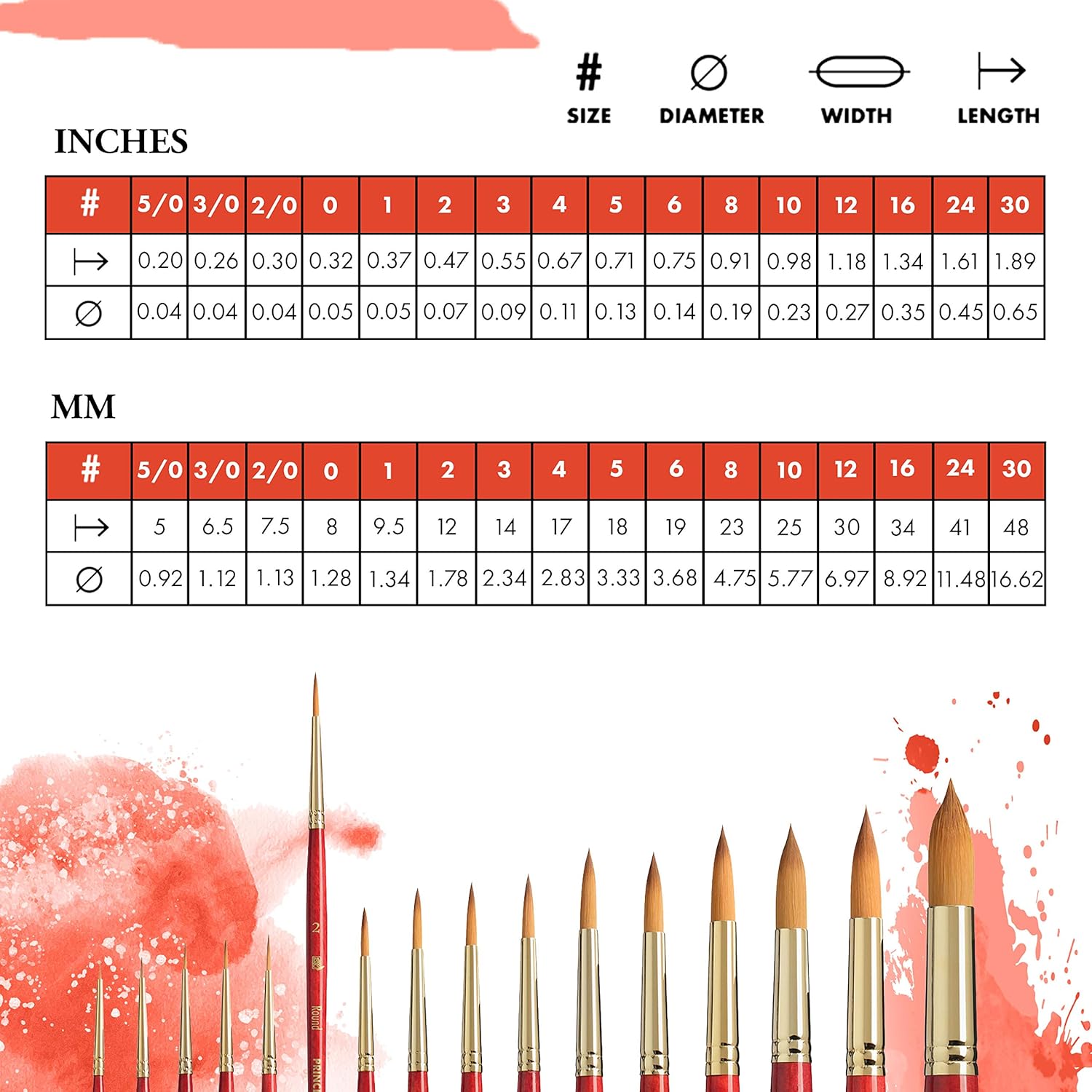
If you’ve been painting watercolors for a year or two, you’ve almost certainly heard someone mention “kolinsky sable” — and felt the sticker shock immediately after. Kolinsky sable is natural animal hair harvested from the tail of the Siberian kolinsky weasel, and it’s widely considered the best material in the world for watercolor brushes. A single round in this hair — say, a size 10 from Winsor & Newton’s Series 7 line — can run $60 to $100 or more. Painters pay that much because the hair does three things naturally: it holds a large reservoir of water and pigment in its belly, releases that load with control as you paint, and snaps back to a crisp point the moment you lift the brush. That combination is genuinely hard to replicate. But “hard to replicate” isn’t the same as “impossible,” and in recent years synthetic brush fibers have closed the gap enough that the comparison is worth having honestly. This article is that comparison — specifically between the Princeton Heritage (a widely praised synthetic sable round) and genuine kolinsky brushes — so you can decide where your money actually makes sense to go.
What You’re Actually Paying For With Real Kolinsky
It’s worth being precise about what kolinsky hair does mechanically, because the case for synthetics only makes sense once you understand what they’re trying to match.
The kolinsky hair’s performance comes from its microscopic structure. Jackson’s Art Supplies, in their published product guide titled “Kolinsky Sable Brushes: What Makes Them Special?”, describes how the hair has a tapered surface with natural oils that create capillary channels — essentially tiny lanes that wick and hold water. This is why a good kolinsky round in a larger size (a 10 or 12) can carry enough paint for several continuous strokes without reloading. Painters often describe this as the brush feeling “full” or “alive.” The snap — the way the brush returns to its point — comes from the hair’s natural elasticity and the taper geometry that makers like Winsor & Newton and Da Vinci preserve through hand-selection and hand-tying.
The Artist’s Magazine has noted in its materials coverage that the supply chain for genuine kolinsky is legitimately constrained. The hair comes from male weasels in specific Siberian and Chinese regions, is subject to CITES wildlife trade regulations, and has seen meaningful price volatility as export restrictions tighten. As of mid-2026, this pressure has kept premium kolinsky prices elevated — Winsor & Newton Series 7 rounds are holding in the $45–$110 range for mid-sizes at most authorized US retailers, with Da Vinci Maestro Series 10 running comparably.
The honest trade-off with real kolinsky: you’re buying peak performance in a material that requires careful maintenance, costs significantly more to replace if damaged, and carries ongoing ethical and regulatory questions that more painters are weighing seriously. Winsor & Newton’s own Series 7 product documentation acknowledges the regulatory environment surrounding kolinsky sourcing.
What the Princeton Heritage Actually Does (and Doesn’t Do)
The Princeton Heritage series uses a proprietary synthetic filament engineered specifically to mimic the belly capacity and spring of natural sable. Artists Network, in their Watercolor Brush Buyer’s Guide, lists the Heritage among synthetic rounds worth considering alongside natural options — meaningful recognition given how rarely that publication elevates synthetic brushes into that tier.
H3: Point Recovery and Spring
The Heritage’s point is sharp, reliable, and holds up through a painting session in a way that cheaper synthetics don’t. It’s not quite kolinsky snap — that immediate, almost eager return to the tip — but it’s close enough that many intermediate painters report not missing the real thing during studio work. Jackson’s Art Supplies’ comparative brush guides consistently identify spring as the single hardest kolinsky characteristic for synthetic fibers to replicate, and the Heritage’s performance on this measure is notably better than the broader synthetic category.
Princeton
$20.95
In stock on Amazon
Check price on AmazonH3: Belly Capacity and Water Load
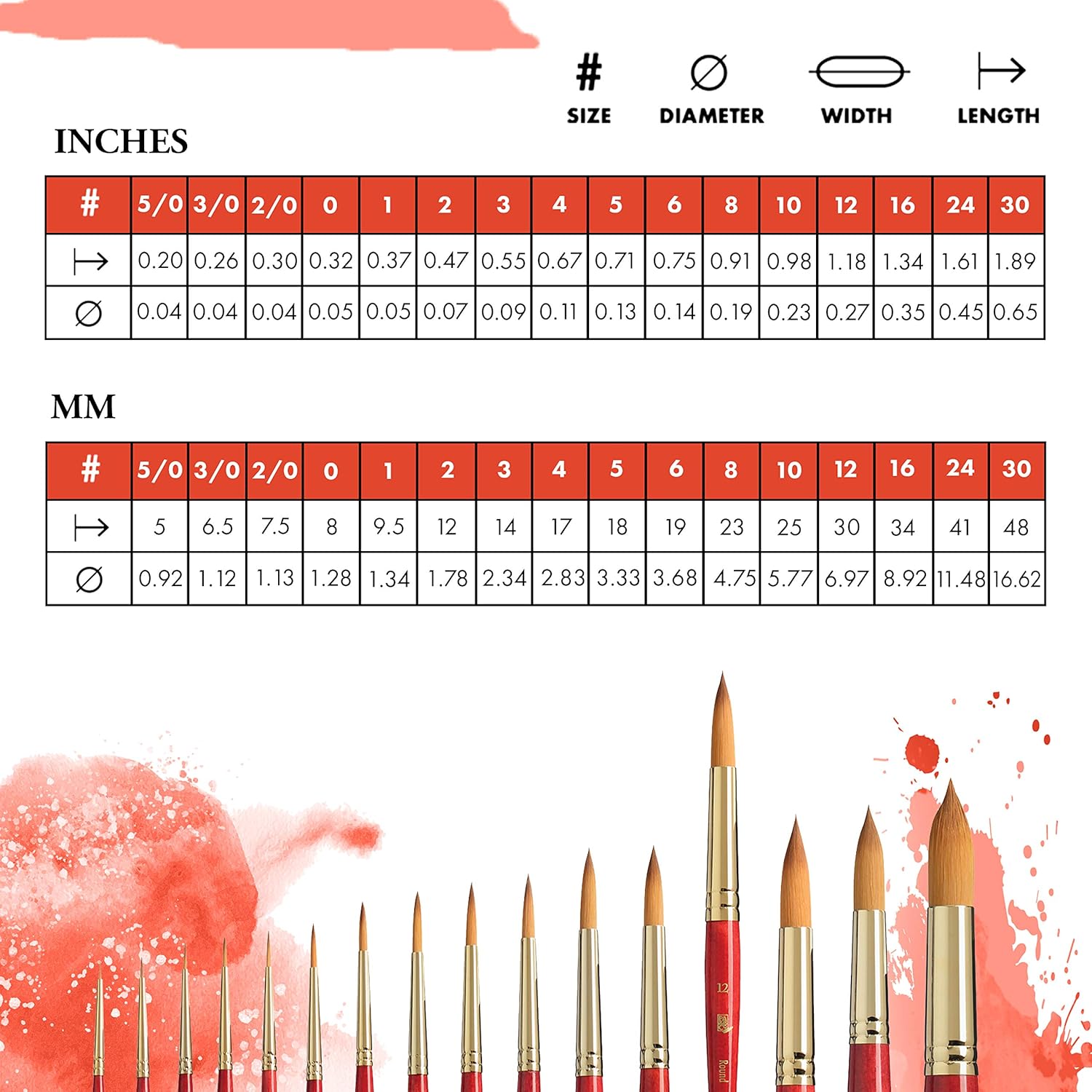
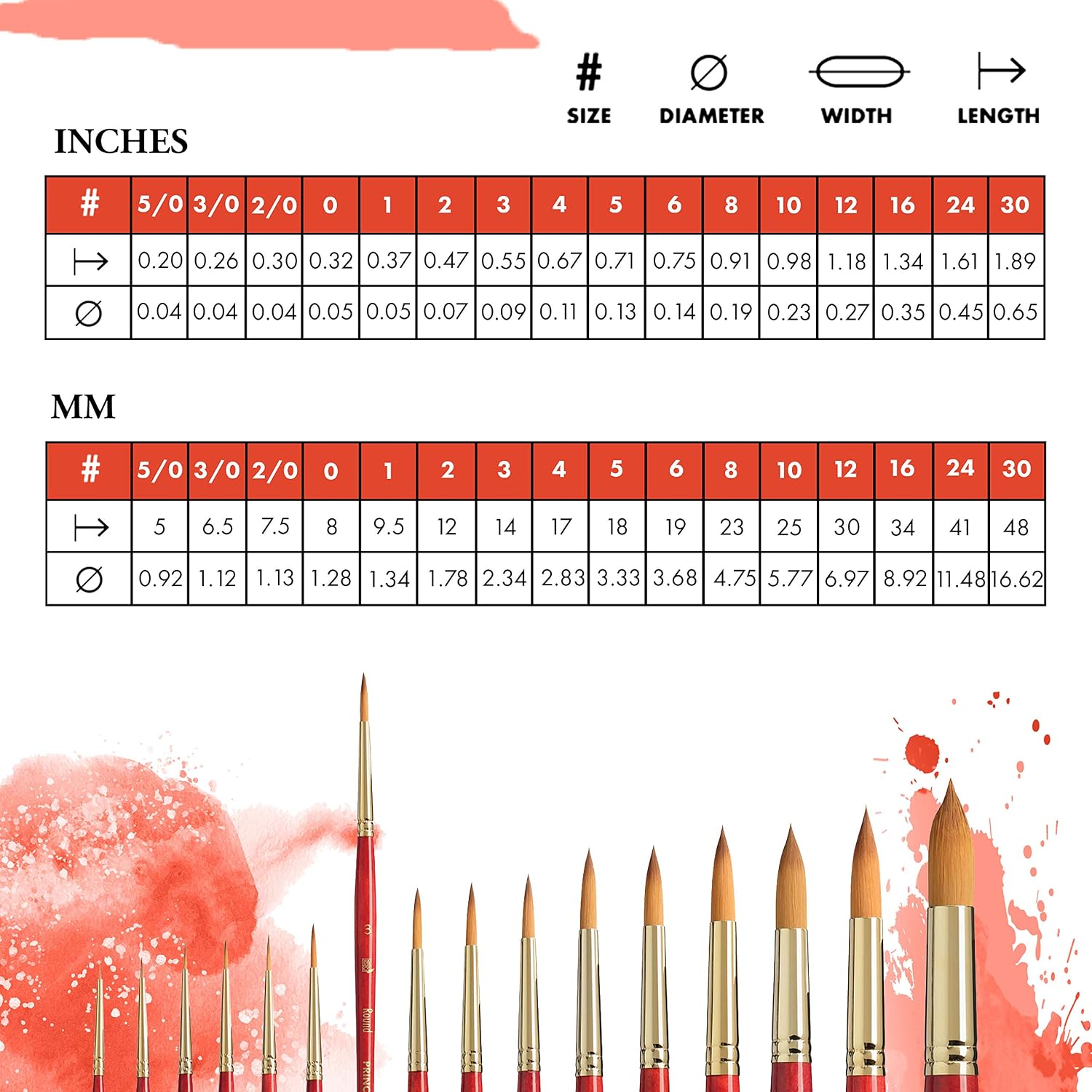
The Heritage holds a genuinely useful amount of water — more than most mid-grade synthetics, less than a top-tier kolinsky of the same nominal size. Based on owner reports aggregated across long-form reviews published on art instruction platforms including Artists Network, a Heritage size 10 behaves roughly like a kolinsky size 8 in terms of paint capacity. You reload a bit more often. For washes and loose work, that’s a minor annoyance. For precise wet-in-wet timing — laying a second wash into a first while the surface is still at exactly the right dampness — the smaller effective reservoir can work against you, because you’re interrupting your rhythm to reload.
Princeton
$20.95
In stock on Amazon
Check price on AmazonH3: Durability and Long-Run Value
Synthetic fiber doesn’t break down from water the way natural hair eventually does, and it’s more forgiving of imperfect cleaning habits. Painters who rotate several Heritage rounds report them lasting two to three years of regular use without significant point degradation. Well-cared-for kolinsky rounds can last longer — but that “well-cared-for” qualifier is doing real work. The Princeton Heritage retails in the $18–$28 range depending on retailer and timing. A comparable genuine kolinsky sits at $60–$100 or more. That’s a 3x to 5x cost difference at the register.
Princeton
$9.99
In stock on Amazon
Check price on AmazonSide-by-Side: The Honest Numbers
| Feature | Princeton Heritage (Size 10 Round) | Winsor & Newton Series 7 (Size 10 Round) |
|---|---|---|
| Retail price (mid-2026) | ~$22–$28 | ~$85–$100 |
| Effective belly capacity | Good (≈ kolinsky size 8 per owner reports) | Excellent |
| Point recovery (snap) | Very good | Exceptional |
| Durability | 2–3 years typical | 3–5+ years with good care |
| CITES / supply risk | None | Ongoing regulatory exposure |
| Cost per year (rough) | ~$9–$14 | ~$17–$33 |
| Best for | Daily practice, travel, studies | Large-format, commissions, wet-in-wet |
Princeton
$9.99
In stock on Amazon
Check price on AmazonPrinceton
$20.95
In stock on Amazon
Check price on Amazon
Princeton
$45.34
In stock on Amazon
Check price on AmazonThe cost-per-year math is closer than the sticker prices suggest — but it still favors the synthetic for painters who aren’t working at a level where peak belly performance changes outcomes.
Where Real Kolinsky Earns Its Price Premium
There are specific situations where the gap between the Heritage and a genuine kolinsky stops being academic and starts costing you work quality.
Large-format wet-in-wet work. If you’re regularly painting 14×20 or larger in the classic wet-on-wet watercolor tradition — working into a wet wash, chasing soft edges, laying a sky in two or three continuous passes — the kolinsky’s larger effective water load matters. The extra time before you need to reload isn’t a luxury; it’s what keeps your timing consistent across a big surface. Jackson’s Art Supplies’ published brush guides specifically identify belly capacity as the defining advantage of quality kolinsky at larger sizes.
High-stakes or commission work. When the painting matters enough that you want every variable in your control, using a known quantity with a proven pedigree makes psychological sense, separate from measurable performance. Professional watercolorists working for clients or exhibitions report sticking with kolinsky precisely because the brush becomes invisible — they’re not thinking about it.
Very fine detail at large scale. Kolinsky’s snap at sizes 4 and smaller is genuinely different from synthetic snap. If fine linework — rigging on a ship, botanical detail, portrait eyelashes — is core to your practice, the real thing gives you a more responsive tool.
The Artist’s Magazine has documented this pattern in its coverage of professional watercolorists: most keep both types of brushes in active rotation, using premium naturals for specific technical demands and synthetics for the work where that edge doesn’t manifest.
Princeton
$45.34
In stock on Amazon
Check price on AmazonWhere the Heritage Is the Smarter Call
The Heritage earns its place — and arguably earns it over real kolinsky — in several realistic scenarios.
Daily practice and studies. If you’re doing the unglamorous volume work that builds skill — two or three small studies a week, color mixing experiments, technique drills — the cost calculus is simple. Using a $25 brush for practice preserves the $90 brush for when it matters. Artists Network’s Watercolor Brush Buyer’s Guide consistently recommends keeping a quality synthetic as a workhorse brush for exactly this reason, noting that synthetic rounds have reached a performance threshold where the gap during routine practice work is no longer meaningful for developing painters.
Travel and plein air. Outdoor painting is rough on brushes. Grit, uneven surfaces, temperature swings, and the reality of not having a proper brush rest all accelerate wear. The Heritage’s durability and lower replacement cost make it the rational choice for a bag that might get thrown around.
Students and intermediate painters building intuition. If you’re still developing your sensitivity to what a brush is telling you — still learning to read the drag of a loaded brush across paper — a Heritage will teach you 90% of what kolinsky would teach you at a third of the cost. The remaining 10% is worth learning, but not before you’ve absorbed the fundamentals.
Ethical and supply concerns. CITES regulations governing kolinsky trade have tightened progressively through the 2020s, and several retailers have faced supply disruptions as a result. For painters who weigh animal-derived materials seriously, the Heritage offers a genuine high-performance alternative without that question.
Princeton
$9.99
In stock on Amazon
Check price on AmazonThe Decision Rule
Here’s the straightforward if-then framework:
If you’re painting studies, doing daily practice work, traveling, or you’re within your first two years of serious watercolor — buy the Princeton Heritage. It performs well above its price, it’s durable, and the money you save goes toward paper, pigment, and painting time, all of which matter more than brush hair at this stage.
If you’re producing finished work at 11×15 or larger, working in a style that depends on extended wet-in-wet timing, or you’ve genuinely plateaued and suspect your tools are the limiting factor — try a single real kolinsky round in a size 8 or 10. You don’t need a full set. Start with one brush, paint alongside your Heritage, and see whether the difference shows up in your actual work rather than just in reviews. If it does, you’ll know exactly why you’re buying the next one.
If budget is the real constraint right now — and for most intermediate painters it is — a Heritage-led brush kit with one quality kolinsky held in reserve for key paintings is a reasonable and defensible position that working professionals use routinely. That’s not a compromise born of ignorance; it’s a considered allocation of resources that the math supports.
The genuine kolinsky is one of the great tools in art-making. It’s also a $90 brush. The Princeton Heritage earns its place in the same kit — not as a consolation prize, but as a legitimate tool for a large portion of what that kit is actually asked to do.