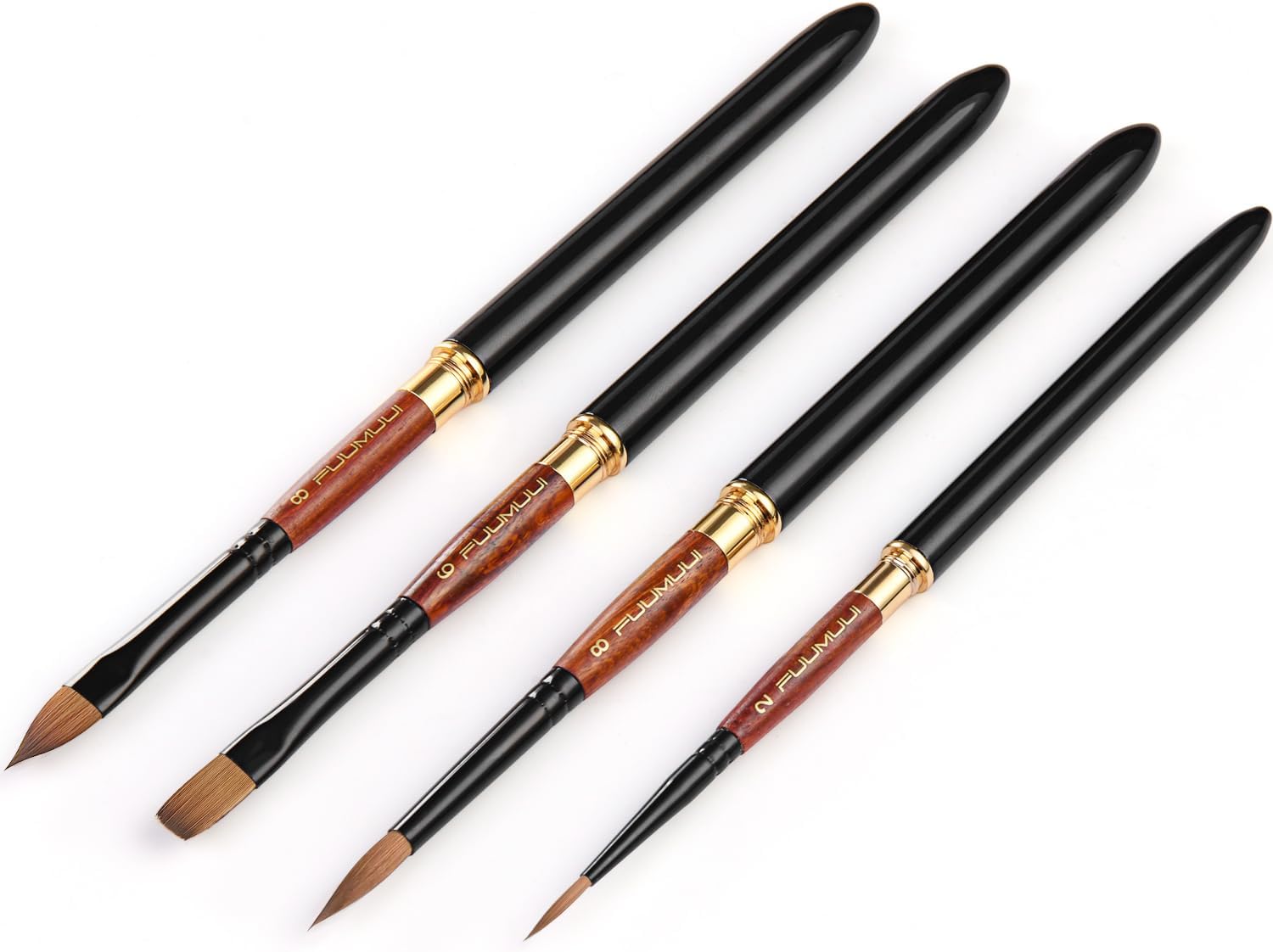
Plein air painting — that’s the practice of taking your paints outside and working directly from life, whether you’re set up at a harbor, a hillside, or a park bench — sounds wonderfully freeing until you’re three miles into a hike and your best brush has a kinked tip from being rattled around in your pack. Travel watercolor brushes are a specialized category: they need to survive transport (usually in a hard case or roll), function with limited water access, and still give you enough control to actually paint well once you arrive. If you’re navigating the leap from studio-only practice into outdoor work, this guide will walk you through what actually separates a good travel set from a frustrating one — and give you a clear decision framework before you spend $40 to $200+.
The core tension in this category is one you’ll hit immediately: portability versus performance. The brush that packs best is rarely the brush that paints best, and vice versa. Let’s break that down honestly.
| EDITOR'S PICKSable Travel Watercolor Brushes | Mid-tierKolinsky Sable Hair Round Water… | Budget pickTravel Watercolor Brushes | |
|---|---|---|---|
| Set count | 4 | 4 | 3 |
| Material | Sable | Kolinsky Sable | Sable |
| Pouch | ✓ | — | ✓ |
| Pouch material | Leather | — | Leather |
| Price | $17.59 | $17.13 | $12.79 |
| See on Amazon → | See on Amazon → | See on Amazon → |
What “Travel Brush” Actually Means (and Where the Category Splits)
There are two distinct things the market calls a “travel brush,” and confusing them is an expensive mistake.
Type 1: Snap-cap or retractable travel brushes. These have a ferrule (the metal sleeve that holds the hairs) that screws into or caps inside the handle, protecting the tip during transport. The brush carries its own case. Brands like Da Vinci Casaneo travel rounds and the Escoda Versatil pocket sets are built this way. You don’t need a separate roll or tube — the brush is its own case.
Type 2: Studio brushes sold as a travel-size set. These are normal brushes in a compact format — shorter handles, smaller sizes — packaged in a hard case or roll. Winsor & Newton’s Cotman pocket set and Princeton’s Neptune travel series work this way. They’re more versatile at the painting surface, but require disciplined packing to protect tips.
Neither is categorically better. The right choice depends on how you travel and how you paint, which we’ll get into below.
The Material Decision: Sable, Synthetic, or Blend?
This is where intermediate practitioners often overthink things — then buy the wrong brush.
Kolinsky sable (the premium natural hair from the tail of the Siberian weasel, Mustela sibirica) is the benchmark for watercolor performance. The tip snaps back to a fine point after each stroke, the belly holds a substantial reservoir of pigment-loaded water, and the release is graduated and controllable. Jackson’s Art Supplies’ guide to watercolour brushes describes kolinsky sable as “unmatched for its combination of spring, point, and water-holding capacity.” In a travel context, that means fewer reloads from your water container — a real practical advantage when you’re working from a collapsible water cup with limited refills.
The problem: kolinsky sable is expensive ($30–$80+ for a single quality round in sizes 8–12), genuinely fragile at the tip when stored improperly, and subject to ongoing CITES trade restrictions that have created supply pressure on premium brands. Winsor & Newton Series 7 and Da Vinci Maestro are the two most respected kolinsky lines; both are available in travel-friendly sizes, but neither is casual-purchase territory.
Synthetic brushes have closed the gap considerably. The Artists Network’s overview of watercolor brush hair types notes that newer-generation synthetics — particularly the “taklon with flagged tips” formulations used by Princeton, Escoda’s Synthetic Versatil line, and Da Vinci’s Casaneo (which uses a proprietary synthetic fiber) — now replicate a meaningful portion of kolinsky’s snap and load. What they don’t fully replicate is the feel of the stroke under pressure and the graduated release of pigment at the belly’s end. Owners consistently report that high-quality synthetics paint well at studio moisture levels but feel less forgiving in field conditions where your water ratio is harder to control.
Blended (sable-synthetic mix) brushes — Winsor & Newton’s Cotman line being the most-reviewed example — offer a middle position. They’re materially more durable than pure kolinsky, significantly cheaper, and better-performing than pure synthetic. For a travel set where your brushes are going to be stuffed in a pack, blends are often the pragmatic answer.
By the numbers:
| Category | Typical per-brush cost | Water-holding | Tip recovery | Field durability |
|---|---|---|---|---|
| Kolinsky sable (W&N S7, DV Maestro) | $30–$80 | Excellent | Excellent | Moderate (tip-sensitive) |
| Premium synthetic (Casaneo, Neptune) | $12–$35 | Good | Good | High |
| Sable-synthetic blend (Cotman, Blick) | $8–$25 | Good | Good | High |
The Four Field Variables That Actually Drive the Decision
Before you build a set, answer these four questions honestly. The answers route you to a specific configuration.
1. How far are you actually carrying these brushes?
Car-to-easel painters (driving to a location, setting up nearby) have very different requirements than backpack painters doing multi-mile approaches. If you’re car-to-easel, a well-organized brush roll with your regular studio brushes in travel sizes is completely viable. You can bring kolinsky rounds because tip protection is manageable. If you’re hiking in, snap-cap travel brushes become almost mandatory — you cannot reliably protect open ferrule tips in a pack.
2. What’s your water access like?
Kolinsky sable’s biggest field advantage — its large belly reserve — matters most when you’re painting with limited water. If you’re working from a collapsible bottle and a single rinse cup, a brush that loads more pigment per dip actually changes how you paint. The Jackson’s Art Blog comparison of kolinsky versus synthetic notes that synthetic fibers generally hold less water in the belly, which translates directly to more interruptions on large wet washes. That’s a technique-level trade-off, not just a comfort one.
3. How protective are you willing to be with your gear?
If you’re the painter who naturally caps brushes, stores them tip-up, and has a system — you can travel with kolinsky. If you’re the painter who gets into a session and things end up wherever they end up, synthetics or blends are the honest choice. There’s no shame in that; it’s just knowing yourself.
4. What sizes do you actually paint with outdoors?
Plein air sessions tend to skew larger than studio work — faster strokes, broader passages, less fine detail. Most experienced plein air painters working in watercolor rely on a round in the size 10–14 range for broad washes, a mid-size round (6–8) for general work, and a rigger or liner for details. The Artist’s Magazine’s plein air essentials coverage consistently echoes this: painters who try to replicate their full studio brush collection outdoors end up using three brushes and wishing the rest weren’t in the bag.
Specific Sets Worth Knowing About
Rather than pretend there’s one right answer, here’s an honest breakdown of the configurations that come up most consistently in practitioner discussions and aggregated reviews.
For the backpack painter who won’t compromise on feel: The Da Vinci Casaneo travel brushes (snap-cap, available in rounds and flats) are the most-cited synthetic travel brush for painters who want performance close to sable without the tip anxiety. Reviewers consistently note the Casaneo fiber holds more water than standard taklon and has credible snap for a synthetic. A set of three — sizes 8, 12, and a flat — runs roughly $60–$90 depending on retailer. The snap-cap system is robust; owners report the caps hold through serious pack abuse.
For the car-to-easel painter who wants studio performance: A three-brush selection from Winsor & Newton Series 7 in a quality brush roll (sizes 6, 10, and a rigger) is the choice most watercolorists eventually land on when they realize they can replicate their studio setup with discipline. The per-brush cost is real ($30–$60 each at current 2026 pricing), but the brushes are identical to what you’re already comfortable with. The trade-off: you’re managing tip protection manually. Use a proper hard-tip travel case or a well-structured roll with elastic slots — not a zip pouch.
For the intermediate painter still building technique: The Winsor & Newton Cotman pocket set is the most pragmatic entry here and one of the most-discussed travel kits in aggregated reviews. The sable-synthetic blend performs credibly, the hard case is genuinely travel-worthy, and the price point (~$25–$40 for a set) means a damaged brush doesn’t derail your session or your budget. The Artist’s Magazine and Artists Network both treat the Cotman line as a legitimate intermediate option rather than a beginner consolation prize.
For painters invested in Japanese craft quality: Escoda’s Versatil pocket travel brushes (Barcelona-made, with a proprietary synthetic that’s stiffer than Casaneo) have a loyal following among painters who want the snap and snap-cap convenience of a travel brush with more tip precision than the softer Casaneo delivers. They’re available through several specialty art supply retailers and are worth considering if your outdoor work tends toward detail-heavy architectural or botanical subjects.
The Decision Rule
If you’ve read this far, you’re probably trying to make a specific call. Here’s the direct version:
If you’re hiking or backpacking to your painting spots: Buy snap-cap synthetic travel brushes (Da Vinci Casaneo or Escoda Versatil pocket). Don’t bring kolinsky into a pack without a hard case — you’ll ruin tips and paint worse for it.
If you’re car-to-easel and you already own quality studio rounds: Build a dedicated travel roll from your existing brush selection in sizes 6–10, protect the tips with a hard roll or tube case, and don’t buy a second set. You don’t need travel-specific brushes if your transport is controlled.
If you’re car-to-easel but don’t yet own quality rounds: The Cotman pocket set gets you painting outdoors well while you develop the technique to justify kolinsky. It’s not a permanent compromise — it’s the right tool for where you are.
If outdoor sessions are becoming your primary practice and you’re ready to invest: three brushes from the Series 7 or Da Vinci Maestro line in a hard case beats every pre-packaged travel kit on performance. The inconvenience is real; so is the painting.
Every purchase in this category is a trade-off between tip protection and performance, between portability and control. The painters who figure out their actual field conditions — and buy for those, not for an idealized version — are the ones who come back with work they’re proud of.